

Buying a contemporary painting is both an aesthetic choice and a statement of cultural identity. But with such a vast array of options available, it can sometimes be difficult to understand why the price of a work of art can range from a few hundred to tens of thousands of euros. Between cliques, reputation, formats, and hidden fees, the subject can seem opaque. This article offers a clear and transparent explanation of how the price of a contemporary painting is determined. You’ll discover how the value of a work of art is determined, how to compare prices across different sales channels, and how to make an informed and confident purchase.
How Is the Price of a Contemporary Painting Determined? Transparency and Cliques
Reading time: ~10 min
- Table of Contents
- The Main Factors That Determine the Price of a Work of Art
- Art Market, Career, and Artistic Clique
- What You're Really Paying When You Buy a Work of Art
- Galleries, Auctions, Direct Sales: How Prices Compare
- How to Tell If You're Paying the Right Price for a Contemporary Painting
- Summary
The Main Factors That Determine the Price of a Work of Art
Who sets the price of a contemporary painting?
Depending on the context, the price is set by the artist, the gallery, or sometimes an art dealer who represents the artist. In the case of an artist like Frédérique Lafourcade, the price generally results from a dialogue between: the artist’s vision of the value of her work; the experience of the gallery or the professionals exhibiting her work; the positioning of her works relative to comparable artists in the contemporary art market. This collaborative process aims to ensure consistency among the artist’s various works, across exhibitions, and with the target clientele.

Format, Duration, and Materials
- Dimensions: A larger size requires more material and time. A 100 × 80 cm piece is not valued the same way as a 27 × 24 cm piece.
- The materials —pigments, collages, inks, metallic foils, or mixed media—directly affect the cost.
- Creation time: Some paintings require weeks to develop; this time is factored into the price.
Technique, visual quality, and uniqueness
Not all artistic techniques are perceived in the same way by the market. In the case of contemporary non-figurative art, visual quality takes center stage: compositional coherence, depth of texture, the power of color, and the originality of the visual language.
Art Market, Career, and Artistic Clique
The Artist's Career and Recognition
The more an artist is exhibited, published, and collected, the more the value of their work is established: the number and quality of exhibitions, their presence in collections, collaborations with prestigious institutions, the consistency of their career trajectory, and the awards they have received.
Sales History and the Concept of a Price Estimate
An artist’s market value is determined by sales results at galleries, to private collectors, or at auction houses. Specialized databases compile these results and provide an objective benchmark. The art world—a network of galleries, critics, influential collectors, and institutions—confirms and disseminates this value.
What You're Really Paying When You Buy a Work of Art
Production and Presentation Costs
The price includes, among other things, high-quality materials (canvas, pigments, varnish), custom framing, studio time—including research and experimentation—and the technical preparation necessary to ensure the artwork’s longevity.
Gallery Fees, Communication, and Distribution
A commission of approximately 50% covers the rent and maintenance of the space, exhibition design, participation in art fairs, marketing, and personalized support for collectors. These investments help build the artist’s reputation and the value of your acquisition.
Transportation, Storage, and Insurance
For large-format or high-value works, packaging, specialized transportation, and insurance during shipping or exhibition also come into play.
Galleries, Auctions, Direct Sales: How Prices Compare
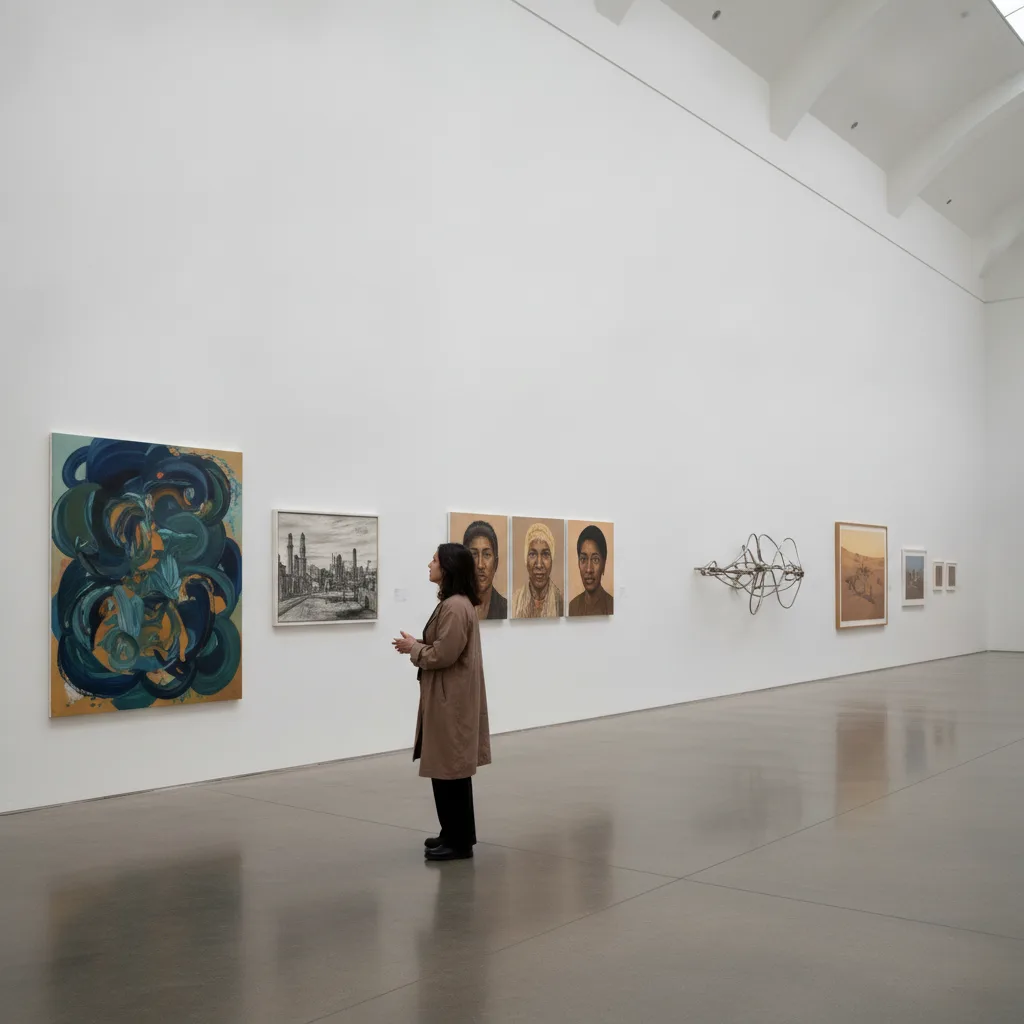
Award at a Contemporary Art Gallery
The gallery acts as a quality filter: selection, exhibition design, and communication. The price reflects the artist’s standing, the target clientele, the gallery’s alignment with the contemporary art scene, and the profit margin necessary for the gallery’s operation.

Auctions
Auctions reveal, over a short period of time, the willingness of various buyers to pay. They can confirm a market value, occasionally drive up prices, or offer opportunities for less sought-after works. Additional fees (buyer’s premium, shipping, insurance) should be expected.
Direct sales from the studio / for collectors
A direct purchase from the studio takes into account the existing pricing policy with galleries, the absence of certain commissions, and the time spent on personalized interaction. The goal is to maintain price consistency while offering direct communication.
| Sales channel | Key Features | Factors Affecting the Price of a Contemporary Painting |
|---|---|---|
| Contemporary Art Gallery | Selection, support, staging, and dedicated communication | Prices that are generally stable and consistent with the artist’s market positioning |
| Auctions | Competition among buyers over a short period of time; public history of results | Prices may be lower than, equal to, or occasionally higher than estimates |
| Direct sales from the studio / for collectors | Direct relationship with the artist; no intermediary fees | Prices are in line with those of galleries, with limited room for flexibility |
How to Tell If You're Paying the Right Price for a Contemporary Painting
Some Useful Tips
Research the artist: learn about their background, exhibitions, and series. Examine price ranges: compare several works by the same artist based on format and size.
Compare with similar artists: examine the pricing practices of non-figurative artists at a comparable level. Take intangible value into account: emotional resonance goes beyond any accounting framework.
FAQ
How is the price of a contemporary painting by an emerging artist determined?
For an emerging artist, the price of a contemporary painting depends primarily on its size, the time spent creating it, the materials used, and consistency with the artist’s previous pricing. The gallery or studio strives to remain accessible while laying a solid foundation for the future growth of the artist’s market value.
Why can prices vary between galleries, auctions, and direct sales?
Price differences stem from the role each channel plays: galleries invest in promotion and support; auctions reflect a specific moment in the market shaped by competition; and direct sales involve fewer intermediaries but align with the existing pricing structure so as not to destabilize the artist’s market.
How can you tell if the price of a contemporary painting is in line with the artist's market value?
You can compare several of the artist’s recent works, review known results from galleries or public auctions, and then relate this information to the artist’s career (exhibitions, awards, collections). If the asking price falls within a reasonable range based on these factors, it is generally consistent with the artist’s current market value.
Summary
The price of a contemporary painting is determined by its dimensions, techniques, labor hours, production and distribution costs, as well as the artist’s market value, career, and network. Understanding these factors gives you the freedom to make an informed choice. To further explore this topic, check out Frédérique Lafourcade’s various series in her online gallery.