
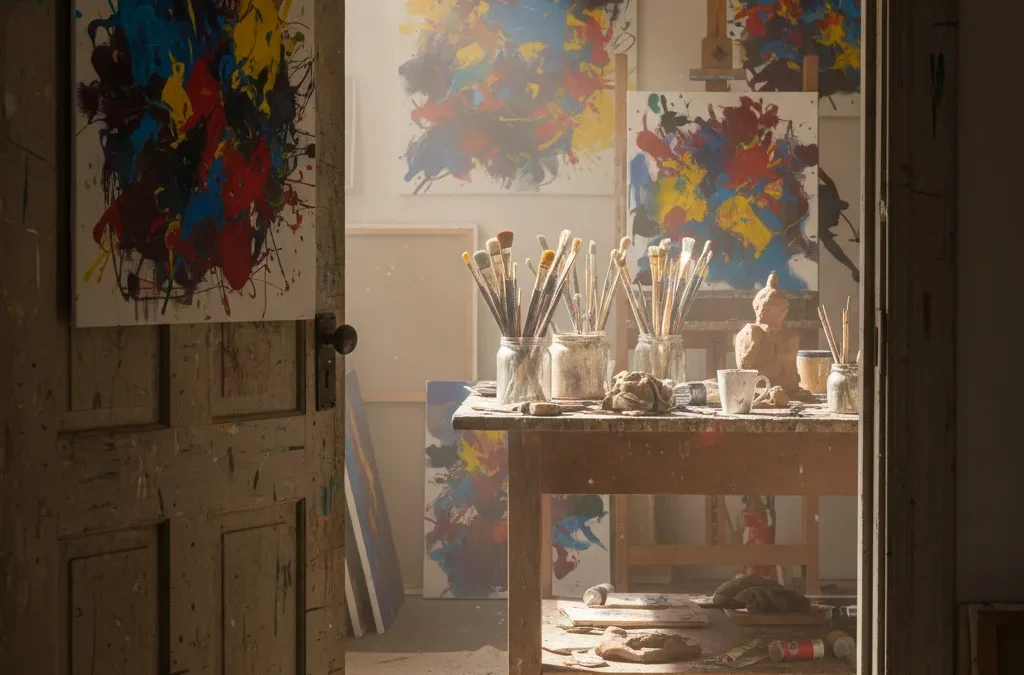
To step through the door of a painter’s studio is to enter a space where time is no longer measured in hours but in layers of color, in traces, in hesitations, and in bursts of energy. The painter’s creative process, especially when it comes to abstraction, cannot be reduced to either a spontaneous gesture or a rigid method. It is at once reflection, intuition, patient work, and letting go.
In Fred Lafourcade’s studio, each painting is the result of a demanding creative process, inspired by reading, travel, memories, and observations of the world. Photographs of the studio, views of works in progress, and videos of the painting process bear witness to this gradual alchemy.
This article invites you to take a look behind the scenes to understand how an abstract painting comes to life—from the initial inspiration to the final hanging—and how this process plays out on a daily basis in a contemporary painting studio in France.
In Fred Lafourcade’s studio: the creative process of a painter—how does an abstract painting come to life?
Reading time: ~12 min
- What is known as a painter’s creative process
- Step 1: Preparation and the Birth of an Idea for a Painting
- Step 2: Incubation and Silent Maturation
- Step 3: Lighting and Composition Decisions
- Step 4: Researching plastics, collage, and first steps
- Step 5: Assessment, Setbacks, and Critical Decisions
- Step 6: Final Development and Creation of the Painting
- The role of the workshop in this process
- The Creative Process and the Viewer's Experience
- FAQ
- From intuition to canvas: the alchemy of the creative process
What is known as a painter’s creative process
Defining the creative process of a painter
When we talk about the creative process, we are describing the series of steps that transforms a vague idea into a concrete work. Creativity researchers often identify five phases: preparation, incubation, illumination, evaluation, and elaboration—a framework that, with some variations, can be found in the practice of many painters.
For an abstract artist like Fred Lafourcade, the goal is not to depict a recognizable subject but to construct a pictorial space imbued with memory and atmosphere. The process thus becomes an ongoing dialogue between the canvas, the materials, and the inner self.
| Pillar | What it covers |
|---|---|
| Preparation | References drawn from landscapes, architecture, texts, and music |
| Exploration | Formal research, collages, works in progress |
| Development | Overlaps, revisions, and sometimes radical decisions |
This dynamic is evident in the various series on display in the gallery.
Step 1: Preparation and the Birth of an Idea for a Painting
From inspiration to the initial concept for a painting
The first step doesn’t begin in front of the canvas: it draws inspiration from reading, travel, and everyday encounters. Each series is rooted in a real or imaginary place: Giverny reflects the light of Impressionism, Tokyo and Tokyo 2 convey the graphic energy of a megacity, while Petra evokes the memory of ancient civilizations.
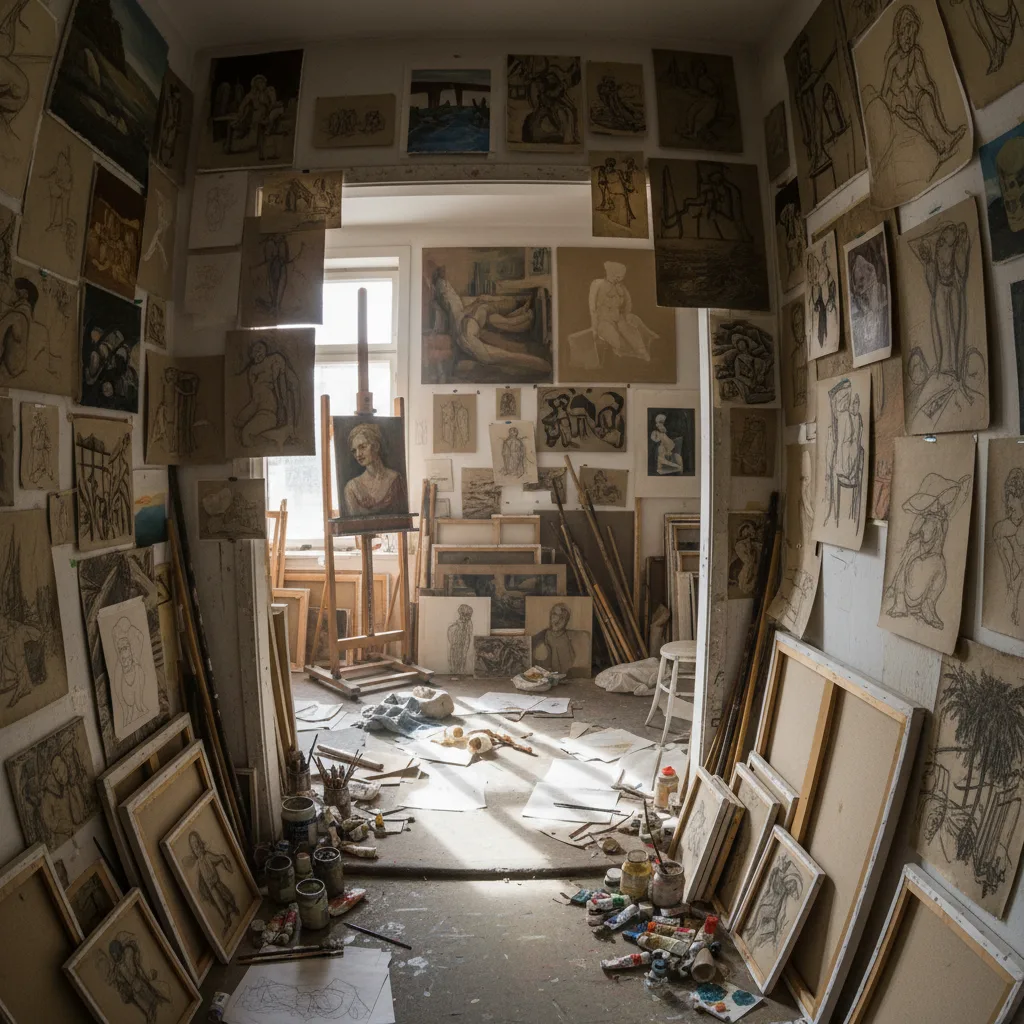
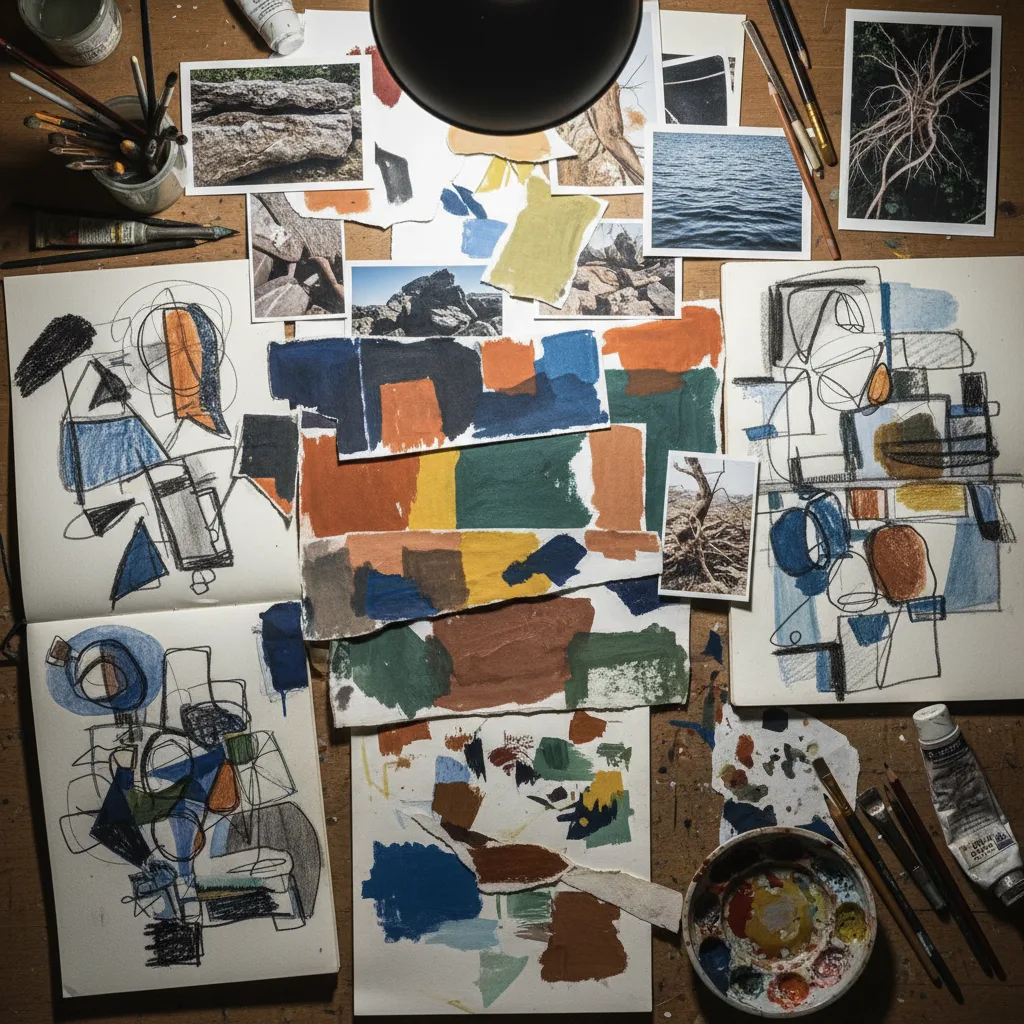
During this phase, the artist builds up an internal reservoir of images through notes, reference photographs, sketches, and color studies. Titles such as *The Edge of Shadow* or *The Wear of Time* already foreshadow the reflection that precedes the act of painting.
Step 2: Incubation and Silent Maturation
After a period of gathering impressions comes a period of reflection. In the studio, finished works and works in progress coexist; their mere presence fuels visual thinking. A painting like *Multitude* sometimes sits alongside the intimate *Rien que vous et moi*, creating an environment conducive to reflection without the need to paint continuously.
The artist turns certain canvases over, begins a background with no specific destination in mind: abstract painting demands this openness to the unexpected.
Step 3: Lighting and Composition Decisions
One day, something clicks: a new color combination, an unexpected spatial structure, or a contrast of materials. For Fred Lafourcade, the spark often comes from a title or a powerful mental image— *The Game of Go*, *The Cliffs *, or *Sideways Path*. The abstract work then becomes the canvas on which this intuition unfolds.
Step 4: Researching plastics, collage, and first steps
Developing the visual language of the painting
The format is chosen, the background prepared (gesso, initial layers of color), and then come the papers, fragments, and traces intended for the collage. A visual language of layers, cracks, signs, and colored blocks takes shape; works such as Lapidary Marks, Ink Stains, and Layers bear witness to this. The artist proceeds by trial and error, covering, tearing, and moving elements: an apparent chaos governed by an internal logic rooted in experience and technical mastery.
Step 5: Assessment, Setbacks, and Critical Decisions
Halfway between a sketch and a finished work, the canvas enters a delicate phase. The artist views it from a distance, turns it around, and compares it to others. Recurring questions: Does the composition hold up? Does the eye move freely across the canvas? Does the color palette remain true to the artist’s intention? Paintings such as Black Shadow, Clock Face, or Stardust bear the mark of this dialogue between excess and restraint.
Step 6: Final Development and Creation of the Painting
Final touches: the artist emphasizes a line, darkens or lightens an area, or sometimes adds a tiny detail that transforms the way the work is perceived. Canvases such as L’heure bleue, Le rêve des poètes, or La belle au bois dormant give the impression of an image that has reached maturity. The decision to stop, within an abstract language devoid of figurative references, rests entirely on the artist’s inner drive. The work can then be sent to the gallery or prepared for an exhibition.
| Step | Main objective |
|---|---|
| 1 Preparation | Gather feedback and references |
| 2 Incubation | Let the idea simmer in the background |
| 3 Lighting | A conceptual or visual breakthrough |
| 4 Search | First attempts, collages, experiments |
| 5 Evaluation | Setbacks, adjustments, consistency |
| 6 Final Draft | Refine, decide on completion |
The role of the workshop in this process
A space at the heart of painting
The studio is not merely a space; it is an active participant in the creative process. The photos ofthe studio show walls filled with canvases, tools, pigments, and papers. For a collector or a gallery, entering this world reveals the physical dimension of the work, the logic behind the series, and the dialogue between older works—such as *The Old Tree*—and recent creations.
The Creative Process and the Viewer's Experience
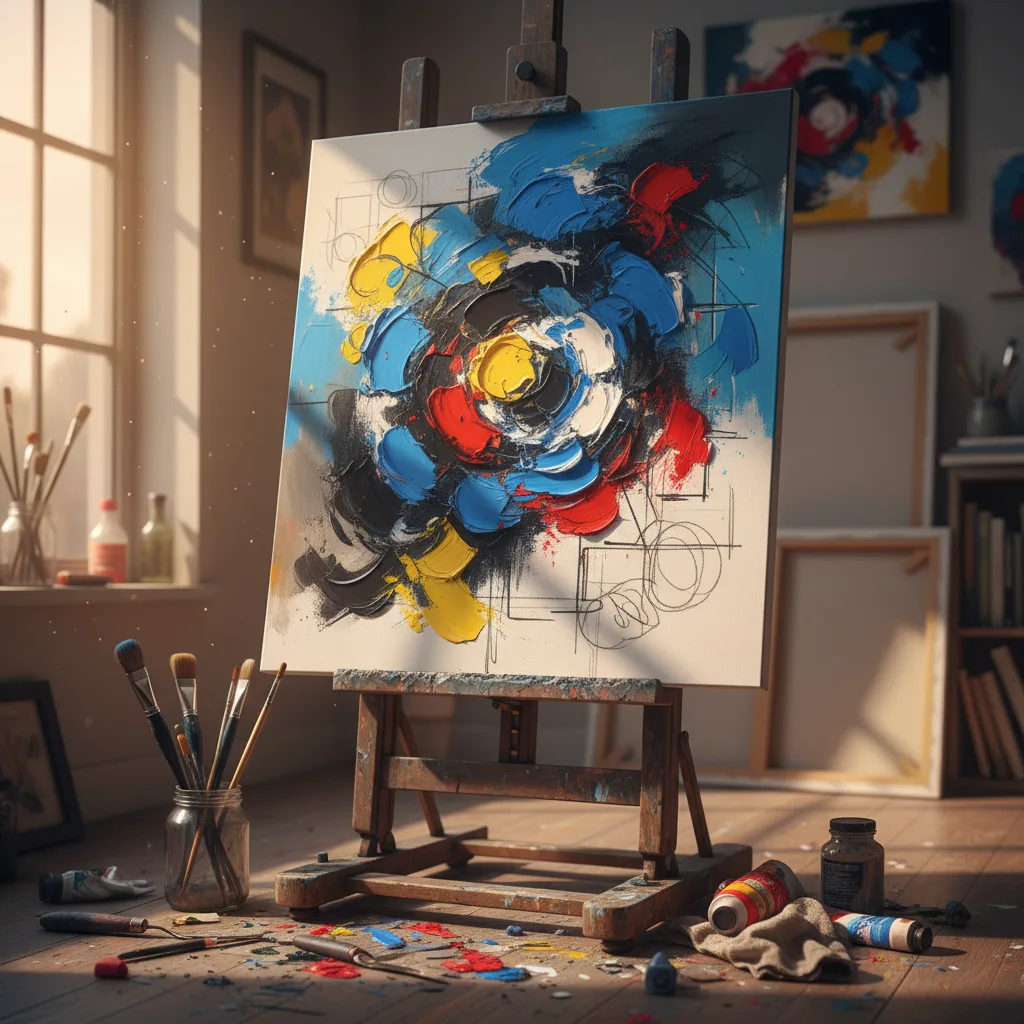
Understanding the origins of an abstract painting changes the way we look at it. Every stroke becomes the memory of a decision; every layer, the mark of time. As viewers explore Fred Lafourcade’s series— Les quais de Seine, Les herbes folles, La girafe —they sense that the work encapsulates a long and demanding journey, ready to find a home in a private residence, the lobby of a prestigious building, or a gallery.
FAQ
How does the creative process of an abstract painter work?
It generally involves several stages: preparation (nurturing the imagination), incubation (invisible maturation), inspiration (clear direction), exploration (backgrounds, collages, initial strokes), and final development (decisive adjustments).
How does the studio influence the creation of a painting?
The studio shapes the artist’s practice: its light, its space, and the simultaneous presence of numerous canvases influence format, color palette, and composition. For Fred Lafourcade, this coexistence lends coherence to his abstract series.
Why should collectors be interested in the creative process?
Understanding the process allows us to appreciate the depth and time condensed within the work, strengthens our emotional connection to it, and situates the artist within the field of contemporary art.
From intuition to canvas: the alchemy of the creative process
Witnessing the creation of an abstract painting in Fred Lafourcade’s studio is like tracing a thread that stretches from intuition to material, from the slow passage of time spent in reflection to the sudden burst of a single stroke. Understanding these stages sheds light on the depth of each work and its evocative power. To extend the experience, explore the online gallery or contact us if you’d like to display these pieces in your own space.