
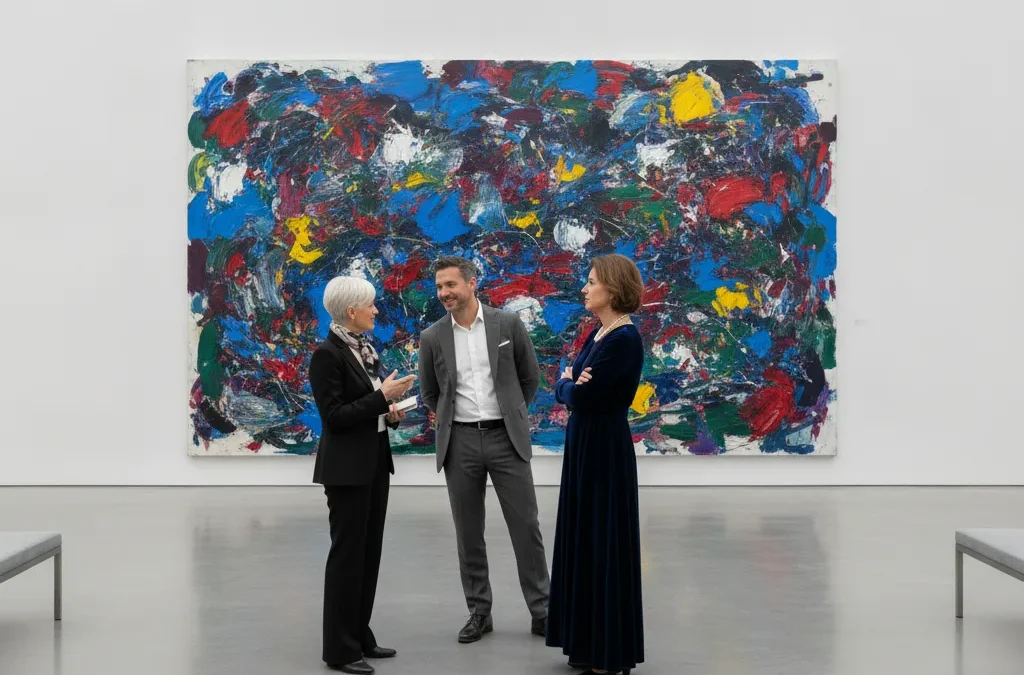
In this article, we explore how to identify an emerging artist to watch in the field of French abstract painting, drawing on the perspectives of critics, galleries, and collectors to better understand current market trends.
Introduction
In recent years, the French abstract art scene has seen a remarkable resurgence of interest. Critics, gallery owners, and discerning collectors are turning their attention with growing interest to a generation of artists who are renewing the visual language without turning their backs on the great traditions. In this context, the question of which emerging artist to follow has become a key topic for contemporary art enthusiasts. Understanding this phenomenon also means gaining a better grasp of the driving forces behind a rapidly evolving market and the opportunities it offers to those who can spot trends before others do.
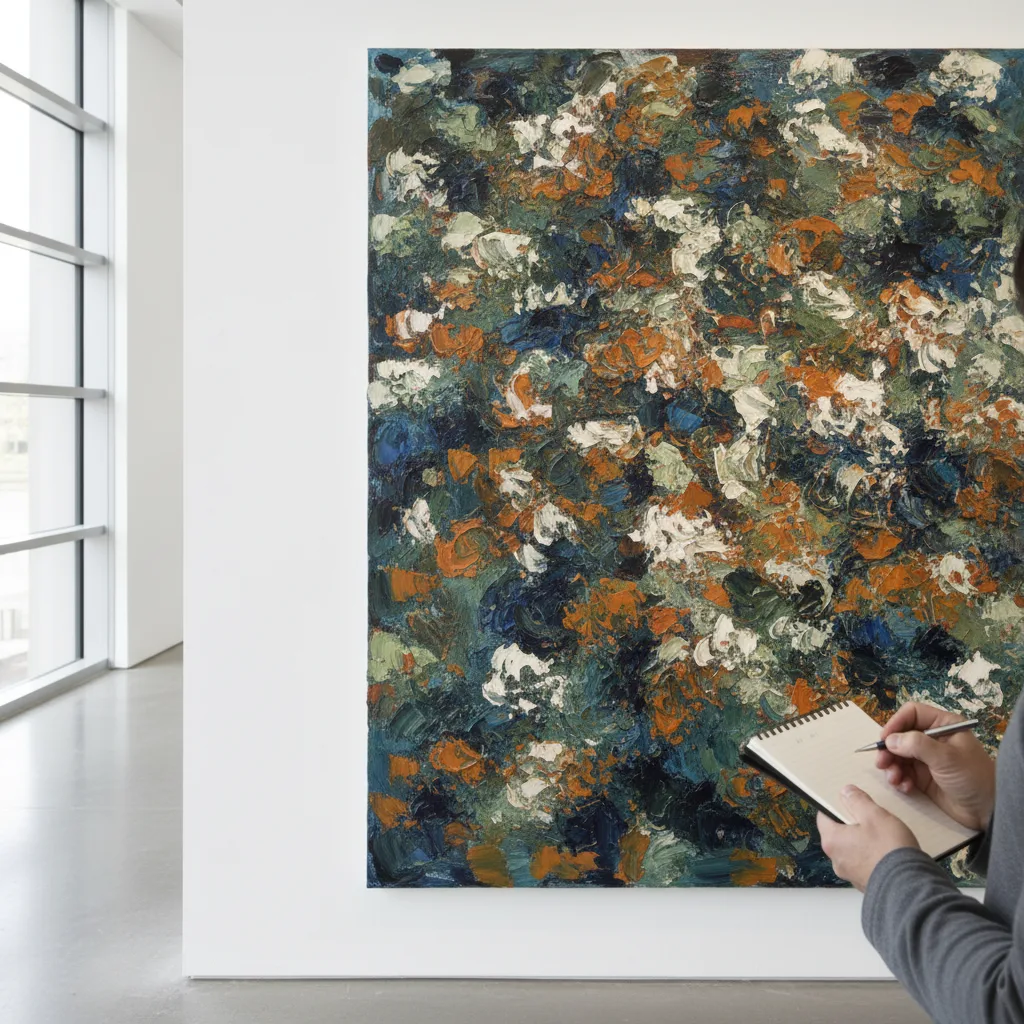
Why art critics are taking an interest in the new wave of French abstract artists and the emerging artist to watch
Reading time: ~5 min
- What critics mean by "an emerging artist to watch"
- Why French abstract art is turning heads in 2026
- The criteria that make an abstract artist stand out
- How collectors can identify the right candidates
- FAQ
- A French abstract artist who attracts critics and collectors
What critics mean by "an emerging artist to watch"
Defining exactly which emerging artist to follow
An emerging artist is not simply a beginner. It is a creator who has already been noticed by galleries, institutions, or specialized media, but whose public recognition and reputation are still in the process of developing. This particular stage of a career is precisely what interests the most attentive critics, as it marks the moment when an artist’s trajectory begins to take shape.
The main benchmarks used by observers
To identify promising talent in the field of non-figurative painting, observers rely on several converging criteria. The first is the presence of a consistent visual signature: a recognizable artistic vocabulary, a unique approach to materials, color, or composition. The second is growing institutional legitimacy, measured by exhibitions in established galleries, selections for fairs such as Art Paris, or awards and artist residencies. The third criterion, which is becoming increasingly decisive, is online visibility, particularly the regularity of work shared on social media and the engagement of an emerging community.
Why French abstract art is turning heads in 2026
An international context conducive to abstraction
Critics’ interest in the new wave of French abstraction is no accident. It is part of an international context in which figures such as Gerhard Richter, Sean Scully, and Katharina Grosse have demonstrated that abstract painting can occupy a central place in the world’s major collections. This newly acquired legitimacy naturally paves the way for a new generation that draws inspiration from it while seeking its own means of expression.
A French ecosystem conducive to the emergence of new businesses
In France, several factors are driving this resurgence. The country’s painting tradition, the dense network of Parisian galleries, and the vitality of contemporary art fairs create fertile ground for the emergence of new names. Specialized platforms such as Singulart and The Oblist now publish annual selections of artists to watch, transforming the discovery of new talent into a genuine editorial practice. These lists serve a dual purpose: to provide educational guidance to the general public and to highlight early acquisition opportunities for the most informed collectors.
The unique status of certain non-figurative approaches
Frédérique Lafourcade’s work is part of this movement; her practice blends painting and collage in a demanding non-figurative approach that is attuned to the layers of time and the inner resonances that a worked surface can evoke.
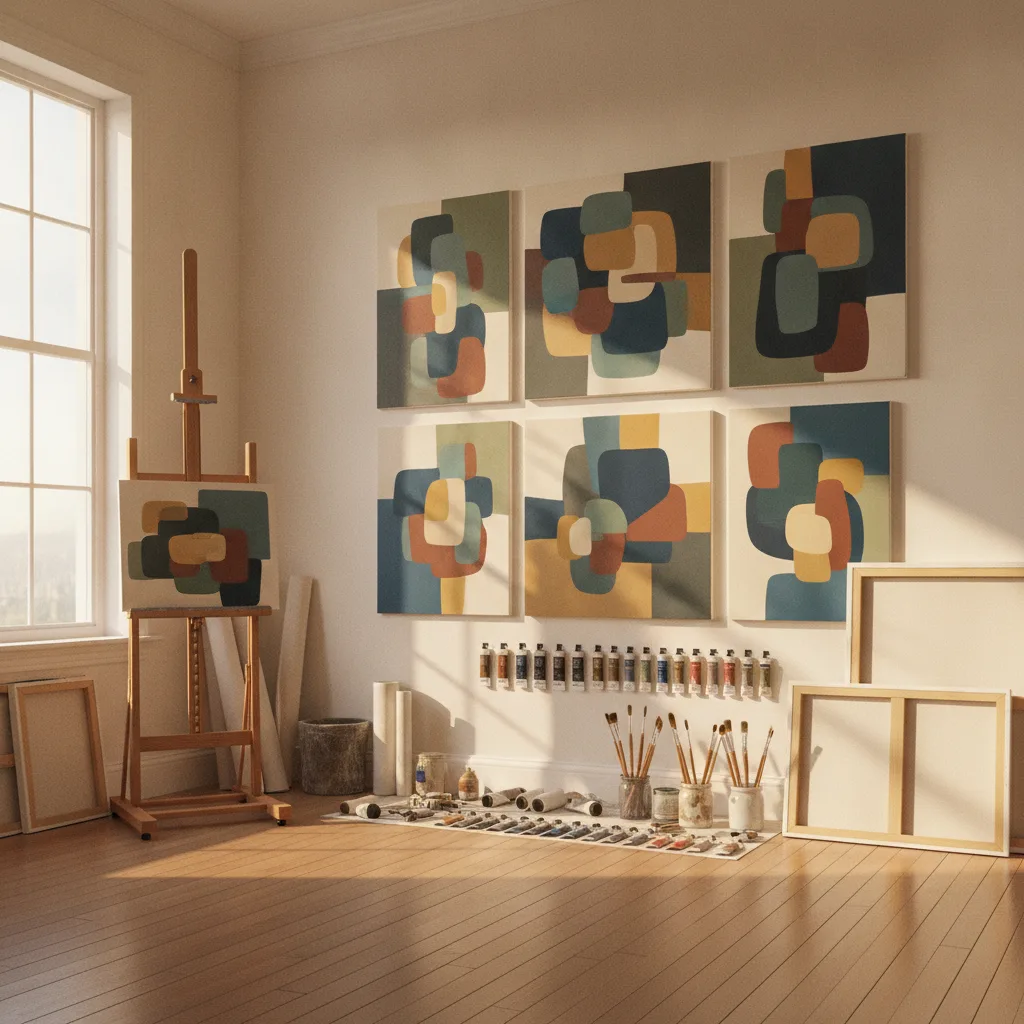
The criteria that make an abstract artist stand out
Contemporary art critics are not easily impressed. For an abstract artist to be deemed worthy of sustained attention, several conditions must be met simultaneously.
Building a coherent and well-defined world
The coherence of the artist’s universe is the first filter. An artist whose every canvas seems to belong to a different world struggles to establish a clear identity. Conversely, an artist who develops a distinct visual language—even as it evolves—gives viewers the means to follow their work over time. Technical mastery is the second criterion, often underestimated in the realm of abstraction: working with the medium, playing with thicknesses, incorporating collage elements, or creating chromatic tensions requires real discipline, far removed from any improvisation.
Create a lasting aesthetic experience
The third element is the ability to evoke a lasting emotion or reflection. The works that capture critics’ attention are those we return to, those that continue to resonate long after our first encounter. This is precisely what the most discerning collectors seek: not mere decoration, but a living presence in their everyday space.
The exposure trajectory as a confidence signal
Finally, the exhibition history matters. Participation in high-quality group shows, representation by selective galleries, or invitations to prestigious events are all signs that the art community has validated the artist’s work. Galleries and exhibitions thus serve as tangible evidence of a growing reputation.
The table below summarizes these criteria and how they play out in practice for an abstract artist.
| Criterion | Reviews | Verification by collectors |
|---|---|---|
| Consistency of the visual universe | Develop a recognizable visual identity that carries through from one exhibition to the next. | Check to see if you can identify the artist without reading the label or caption. |
| Technical expertise | Examine the use of materials, color, formats, and series. | Examine the quality of execution of the works viewed in galleries or studios. |
| Emotional and intellectual resonance | Identify the standout works in a group exhibition. | To ask whether the work continues to engage the viewer’s gaze after the visit. |
| Exposure history | Assess the caliber of the venues showcasing the work (galleries, art fairs, artist residencies). | Track the consistency and progression of exhibitions over time. |
How collectors can identify the right candidates
For a contemporary art enthusiast looking to build a cohesive collection, identifying a new abstract artist before their market value skyrockets is both an intellectual pleasure and a form of cultural investment. Here are the most reliable indicators.
Analyze the artist's career and training
Start by researching the artist’s background: education, past exhibitions, and inclusion in private or institutional collections. These factors provide insight into the strength of their artistic approach and the recognition they have already achieved. Next, assess the consistency of their visual style across multiple series or years of work. An artist who evolves without losing their way is an artist who is building a body of work.
Draw on curatorial selections
Check out the curated selections from online galleries and specialized media outlets. Publications like *Beaux Arts Magazine* and platforms such as *Rise Art* or *The Oblist* provide curated selections that can serve as a starting point. Also, stay up to date on the latest news from French and European art fairs, which remain the venues where legitimacy is established most quickly.
Meet the artist and see their workspace
Finally, take the time to visit artists’ studios or view their online portfolios. The way an artist documents their work, explains their approach, and presents their series often reveals as much as the works themselves.An abstract painter’sstudio is a valuable source of insight for any serious collector.
FAQ
What sets an emerging abstract artist apart from an established one?
The distinction lies primarily in the stage of recognition. An established artist enjoys an established market value, a regular presence in major institutions or art fairs, and a solid critical reputation. An emerging artist has already been identified and supported by galleries or specialized platforms, but their recognition is still developing. It is precisely this intermediate stage that interests savvy collectors, as it often corresponds to the most favorable time to acquire works.
Why is there a renewed interest in non-figurative abstract painting?
Several factors account for this resurgence. First, the international recognition earned by major figures in abstract art (from Pierre Soulages to Mark Bradford) has paved the way for lasting appreciation of this artistic practice. Second, contemporary collectors are increasingly seeking works that can make a strong visual impact in their homes, without imposing a narrative, leaving room for their own interpretation. Abstract painting meets this need better than any other genre.
How can you tell if an abstract artwork is a good cultural investment?
Investing in an abstract work depends less on financial criteria than on the strength of the artist’s approach and the consistency of their career trajectory. A work that is part of a cohesive series, created by an artist with a well-documented career and whose work is supported by reputable galleries, represents a sound choice. The emotional aspect also matters: a work that leaves a lasting impression on you is more valuable than a piece purchased purely for financial gain.
A French abstract artist who attracts critics and collectors
The new wave of French abstract artists is gradually establishing itself as one of the most closely followed movements among critics and collectors in 2026. It brings together artists capable of combining formal rigor, a coherent artistic vision, and the ability to evoke lasting resonance. For contemporary art enthusiasts looking for an emerging artist to follow, the timing is particularly favorable: the works are still affordable, the artists’ trajectories are clear, and galleries are fully fulfilling their role as gatekeepers.
To explore this scene in greater depth and discover non-figurative paintings and collages associated with this movement, browse Frédérique Lafourcade’s gallery.